We almost didn’t write this guide.
Not because the information isn’t worth sharing, but because every time we talk about how to prepare ceremonial cacao with someone in person, it’s a different conversation than the ones we see written down. Less formal. More honest. Full of the small things that actually make the difference, and fewer of the things that sound impressive but don’t help you at 7am on a Tuesday when you’re just trying to start.
So we’ve tried to write it the way we’d say it. Which means this might not read like what you expected. That’s intentional.
What Makes Cacao Ceremonial?
Before we get into preparation, it’s worth understanding what actually makes cacao ceremonial, because not all cacao sold under that name deserves it.
There are three things we look for: Purity (100% organically grown cacao, single origin, nothing added), Process (handmade using traditional methods, proper fermentation, slow drying, gentle toasting, not industrially processed), and Intention (the reverence held by those who grew it, made it, and the presence you bring to drinking it).
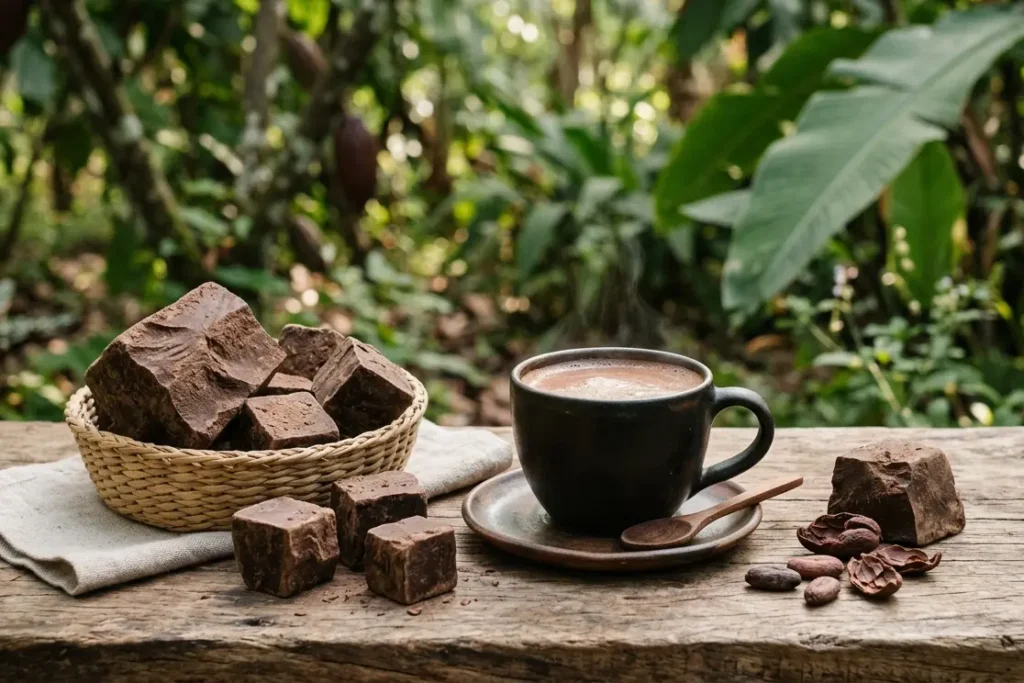
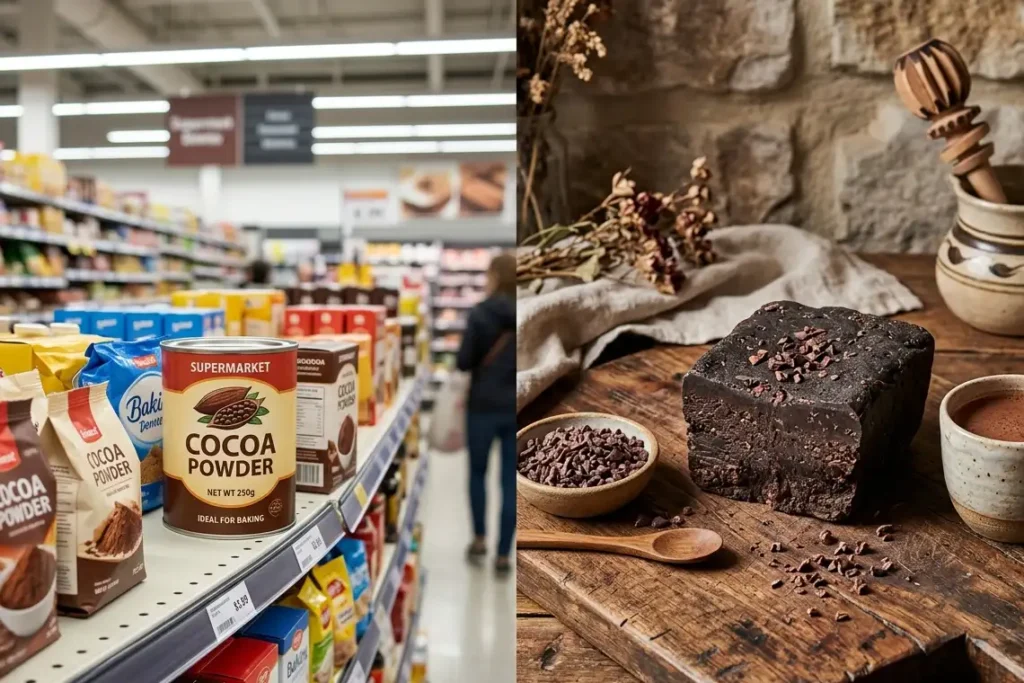
Ceremonial cacao is sold as a solid paste made from whole ground cacao beans. It retains all its natural fats and minerals. Cocoa powder is heavily processed, heated at high temperatures, and stripped of its natural cacao butter and most of its benefits along with it. That is not a small distinction. It is the whole difference.
What You Need
The first thing worth saying is that most people make this more complicated than it needs to be before they’ve even started. They research for two weeks, buy six different spices, and still haven’t made a single cup. We’ve seen it a lot. The practice doesn’t require that. It requires showing up.
For one serving you need:
10 to 20 grams of ceremonial cacao in paste or cube form. Ceremonial grade, properly sourced. Not cocoa powder. Not drinking chocolate. Not a supermarket dark chocolate bar, even the expensive ones. The difference between those and actual ceremonial grade cacao isn’t marketing language. It’s the compound profile and it’s the reason one of them changes how you feel and the others just taste like chocolate.
You also need 60 to 70ml of filtered water and/or vegan milk. Avoid dairy of any kind. Dairy proteins bind to cacao’s active compounds and block your body from absorbing them properly. Coconut works beautifully and doesn’t interfere with what the cacao is doing.
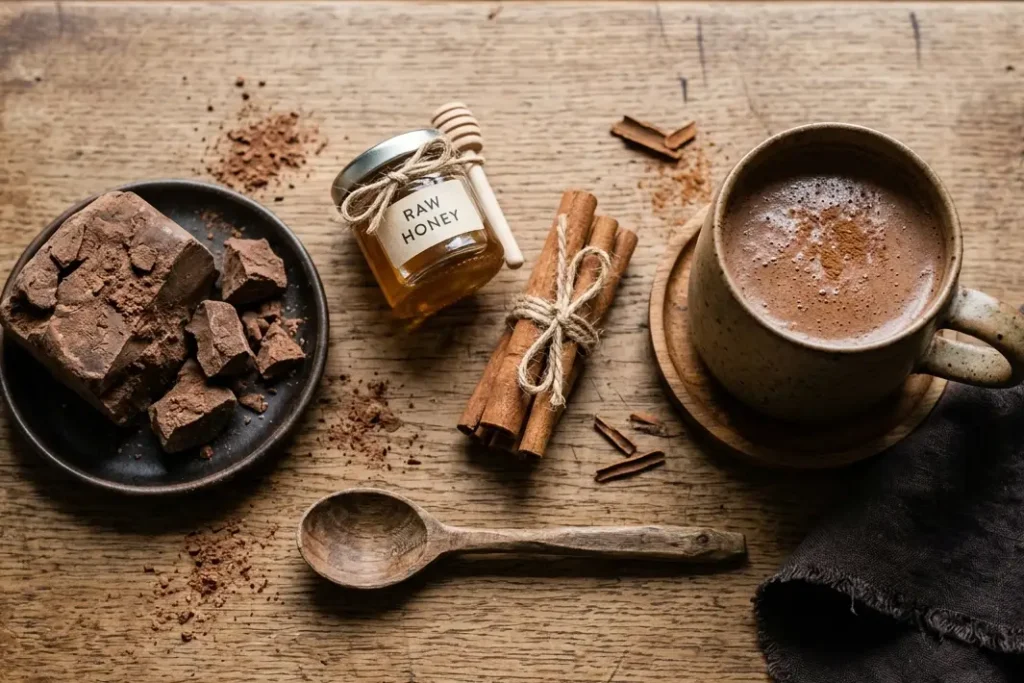
Optional additions: a pinch of cinnamon, a small amount of cayenne (this will help your body absorb more of the cacao’s compounds), raw honey or maple syrup, a drop of vanilla extract, perhaps cardamom or sea salt, maybe a pinch of rosemary or a rose petal from the garden. Taste as you go. What does today actually need, not what the recipe says?
For tools: a small saucepan, a wooden spoon or small whisk, and a cup that means something to you. Not a special ceremonial cup if you don’t have one. Just one you like holding. That matters more than it sounds like it should.
Our Mayä Magic Cubes are pre-portioned, dissolve in seconds, and were designed for exactly this moment, the moment someone genuinely wants to start a cacao ritual today without it becoming another thing on the to-do list that never happens.
Step-by-step recipe
This is our easy ceremonial cacao recipe for beginners. Under ten minutes from start to first sip. Simple enough that it becomes muscle memory within a week.
Step 1: Prepare the cacao
If using a block or paste, break or grate it into small pieces so it melts evenly and gives a smoother drink. If using Mayä Magic Cubes, skip straight to step two. There is nothing to prepare.
Step 2: Heat the liquid carefully
Bring your 60 to 70ml of filtered water or vegan milk to around 30 to 35 degrees Celsius, ideally not above 40, and never above 47. No thermometer needed: bring your kettle to the boil, take it off the heat, and wait a few minutes until it cools down to a gentle warmth.
This matters more than people realise. Our cacao is classed as raw, minimally processed to protect as many of the natural compounds as possible. High temperatures kill those compounds off. Boiling water destroys them entirely before you have taken a single sip. Ceremonial grade cacao paste retains all of its natural cacao butter, the fat that allows the active compounds to be absorbed slowly and evenly by your body over several hours. You are paying for quality cacao. Don’t destroy what makes it worth paying for.
Step 3: Add your spices and flavour
With the pan still on a low heat, stir in any spices or flavourings you are using. Cinnamon for warming depth, particularly good on cold mornings. Cayenne to open circulation and help your body absorb more of what the cacao is offering. Honey or maple syrup to take the edge off without hiding the cacao itself. Cardamom, sea salt, vanilla, a pinch of rosemary, a rose petal from the garden. Let the spices bloom gently in the warm liquid for a moment before the next step.
Step 4: Take off the heat and add the cacao
Remove the pan from the heat entirely. Now add your prepared cacao, the grated paste, flakes or Mayä Magic Cubes. Stir slowly and steadily until fully dissolved. Taking the liquid off the heat before adding the cacao is not a small detail. It protects the very compounds that make this worth doing. Use a small whisk if you would like a little froth. The smell at this point is one of the things people mention most when they talk about why this practice stayed with them. Pay attention to it.
Step 5: Pour and pause
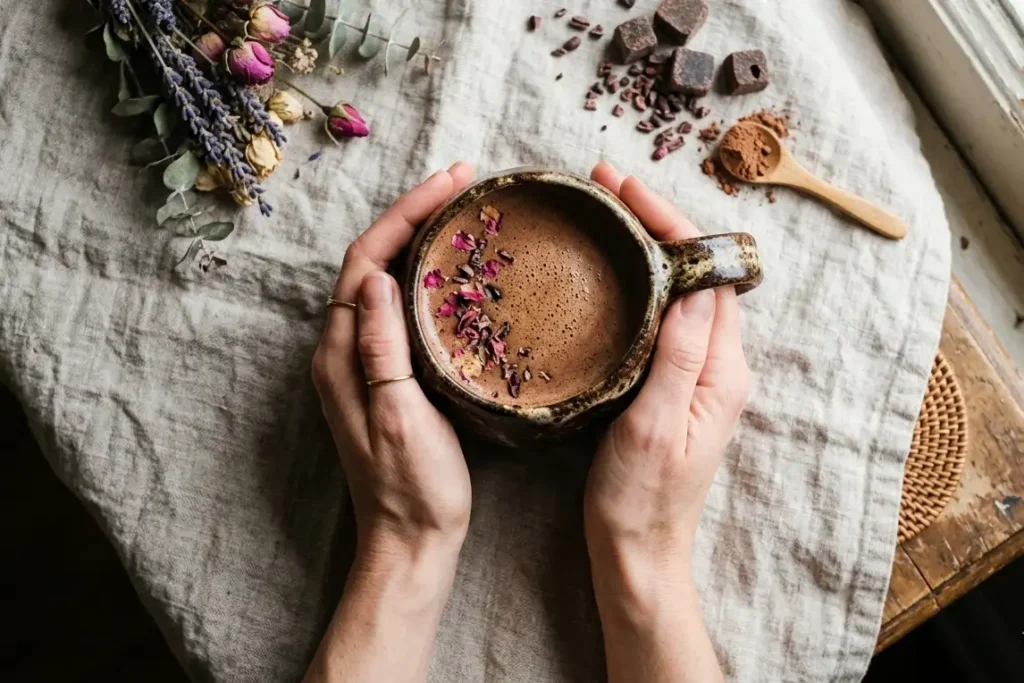
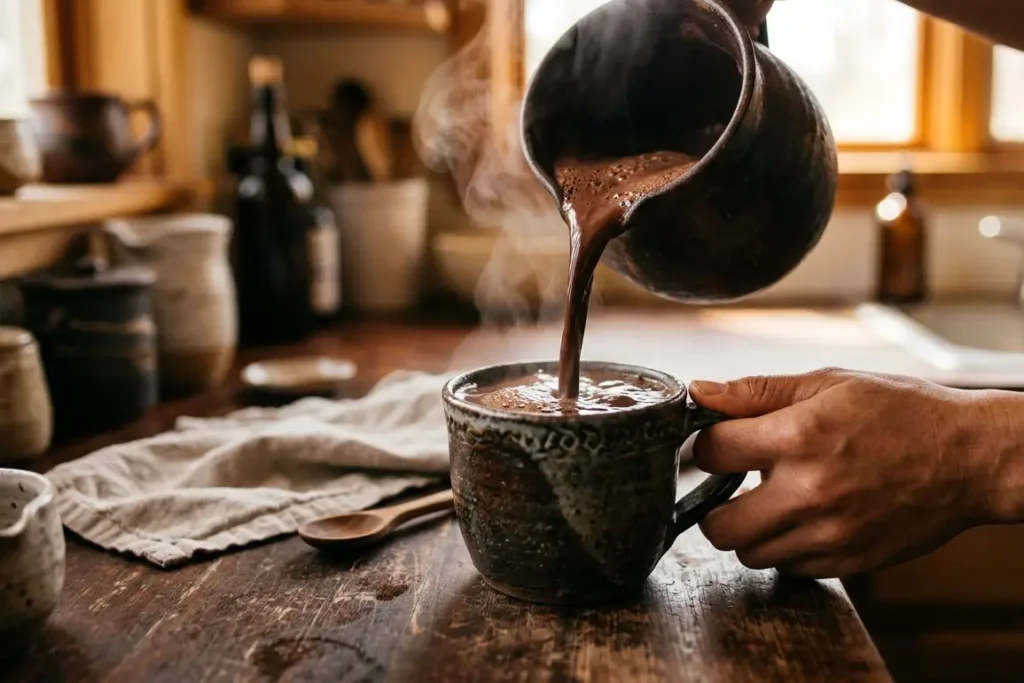
Pour into your cup. Hold it with both hands. Take a few seconds before your first sip. Breathe in before you drink. Let the warmth sit in your palms. That pause is what separates a cacao ceremony from simply making a hot drink. It is small. It is quiet. It is actually the whole practice in miniature.
Setting an intention
Every guide on how to prepare ceremonial cacao includes this step. Almost none of them tell you what to do with the awkwardness of it when you are new and sitting alone in your kitchen and the idea of setting a sacred intention feels a bit much.
Here is the honest version. Before you take your first sip, ask yourself one genuinely honest question: what do I need right now? Not what sounds good. Not what you would write in a wellness post. The real answer. The one you would normally skip past.
It might be focus. It might be to stop avoiding something you have known you need to face. It might simply be to feel less like a stranger in your own life for twenty minutes. Hold your cup. Close your eyes. Say the answer quietly. One word is completely enough. That is your intention.
We want to share something one of our community told us, because it stayed with us. She had made a ceremonial cacao ritual at home three times. Each time a pleasant warm drink, nothing more. The fourth time she sat properly, held the cup in both hands, closed her eyes, and said one word quietly before she drank. She cried for about five minutes straight and then said she felt better than she had in months.
“I didn’t realise I’d been carrying that,” she told us. “I hadn’t sat still long enough to notice.”
That is not exotic. That is not the cacao doing something mysterious. That is ten minutes of actual stillness doing what ten minutes of actual stillness does when you have had very little of it for a long time. It is also why the benefits of ceremonial cacao are impossible to put on a label

Enhancing the ritual over time
The basic recipe is a doorway. What is through it tends to build on its own once you start walking through regularly.
Find a corner that is yours for these twenty minutes. A candle. A blanket you like. Nothing elaborate. Five slow breaths before you drink. Ten minutes of honest writing after, not journalling in the aspirational sense, just writing down what is actually true right now without correcting it. Over weeks you will start to notice what keeps coming up. That is worth paying attention to.
The practice also changes with the seasons if you let it rather than forcing a fixed method. Warmer and heavier in winter. Lighter at sunrise in summer. The cacao is responsive if you are.
For in-person ceremonies and events across the UK, our Sacred Rituals page has everything.

Common mistakes to avoid
All of these come up constantly. None of them are complicated to fix.
Using cocoa powder or drinking chocolate. Heavily processed, stripped of cacao butter, full of things you do not need in your ritual. They will not give you the experience. Get ceremonial cacao from a source you trust and taste them alongside each other. The gap is immediate and it ends the conversation.
Overheating the liquid. Already explained above. Keep it at 30 to 35 degrees Celsius, ideally not above 40, and never above 47. Always take the pan off the heat before adding the cacao. High temperatures kill the very compounds you are paying for.
Adding dairy. Dairy proteins bind to the active compounds in cacao and significantly reduce how much your body can absorb. Use filtered water or a plant-based milk. Coconut is our favourite.
Skipping the intention. You get a warm drink. Maybe a nice one. But not the practice.
Rushing. If you are making this in two minutes between meetings it is not doing what it is designed to do. The slowness is not optional. It is the practice. That said, if you genuinely only have a few minutes, our Mayä Magic Cubes were made for exactly that. No chopping board, no knife, no scales, no saucepan. A cup ready in under a minute, with the same ceremonial grade cacao inside. The ritual can be shorter. The quality does not have to be.
Starting too high on the dose. Start at 10 to 20 grams. Build gradually. There is nothing to prove here.
Why the preparation actually matters
There is a version of this section that lists compounds and cites papers and sounds authoritative. We will touch on the science because it genuinely backs this up. But we want to start with something more direct.
The reason preparation matters is because you are not just making a drink. You are building a container. And the quality of that container, the liquid temperature, the quality of the cacao, the two minutes of stirring without your phone in your other hand, shapes what becomes possible inside it.
Ceremonial cacao works through a powerful trio of naturally occurring compounds: Theobromine, which widens blood vessels, improves circulation and sharpens focus, producing a sustained gentle energy without caffeine’s crash; Anandamide, often called the bliss molecule, which lifts mood and opens the heart; and Phenylethylamine (PEA), which supports emotional balance and heightened awareness. It is the combined relationship between all three, not any single compound alone, that makes ceremonial grade cacao so uniquely nourishing for the mind, body and heart.
All of those compounds are sensitive to heat and processing. This is exactly why we class our cacao as raw and exactly why how you prepare it determines how much of that actually reaches you.
Sourcing matters just as much. When you buy ceremonial cacao from a source that is ethically sourced and minimally processed, you protect the compound profile your body responds to. What you start with shapes everything that follows.
Expert Tip: A nutritional therapist and cacao facilitator working across London and Bristol told us: “If the cacao doesn’t taste alive there’s usually a reason for it. Good ceremonial grade is earthy and bitter but with natural sweetness underneath. That sweetness is the cacao butter still intact. Without it you’re tasting a fraction of what the plant actually is.”
Expert Tip 2: A yoga teacher who uses cacao in UK community classes said: “I ask people to hold the cup at heart height and whisper their intention into the steam before drinking. It sounds a bit much right up until they do it and something shifts. Nobody skips that step twice.”
Your Ritual Starts Here
You have everything you need now. The steps and the understanding behind each one.
The first cup you make with a real intention will feel different from anything you have made before. We are not saying that as a line. We are saying it because we have watched it happen for people across this community over and over, people who came in sceptical and left changed in small but lasting ways, and it still means something every single time.
Shop Mayä Magic Cubes, the easiest way to begin your ceremonial cacao practice today
Browse our Sacred Collections for ceremonial cacao UK bundles and ritual tools
Explore Sacred Rituals for guided cacao ceremonies and heart-opening events across the UK
Start slow. Stay present. Let the cacao do what it does.
Author Bio
This guide was written by the Mayä team, a UK-based wellness and ceremony collective built around heart-opening practices, conscious community and genuine respect for plant medicines. We source single-origin ceremonial cacao from the highlands of Guatemala, ethically and with deep respect for the Mayä traditions it comes from. We have held space for cacao ceremonies, ecstatic dance events and sacred rituals across the UK for years. Everything here comes from lived experience inside this practice. Not from research alone.