If you have ever broken out in hives after eating a chocolate bar, felt your throat tighten after a hot cocoa, or watched your child react to something as simple as a brownie — you are not alone.
Food allergies affect an estimated 220 million people globally and 32 million in the United States alone. According to CDC data from 2024, almost 7% of adults and 5% of children in the US have a diagnosed food allergy. And chocolate sits at the centre of one of the most misunderstood allergy conversations in food.
Here is the truth most people never hear: it is almost certainly not the cacao that is causing the problem.
This guide breaks down what actually triggers chocolate allergic reactions, why pure ceremonial cacao is naturally free from the top allergens, and how factory-sealed processing eliminates the cross-contamination risk that makes most chocolate unsafe for allergy sufferers.
True cacao allergy is extremely rare — the science is clear
Let us start with what the medical research actually says.
A true IgE-mediated allergy to cacao — meaning your immune system genuinely reacts to proteins in the cacao bean itself — is one of the rarest food allergies documented in clinical literature.
Researchers at major allergy centres have noted that while around 0.5 to 0.7 percent of people self-report a chocolate allergy, these numbers collapse under clinical scrutiny. When patients undergo supervised oral food challenges (the gold standard for allergy diagnosis), the vast majority show no reaction to pure cacao whatsoever.
In fact, challenge-proven IgE-mediated cacao allergy has only been confirmed in a handful of documented cases worldwide. The clinical consensus is clear: when someone reacts to chocolate, the culprit is almost always something else in the product — not the cacao itself.
This distinction matters enormously. Because if cacao is not your problem, you do not have to give up chocolate. You just need to find a source of cacao that does not come loaded with the things that actually cause reactions.
Deep dive: We break down exactly how contamination happens — and the 7 processing touchpoints where allergens sneak in — in our full guide: Cross-Contamination Is the Real Chocolate Allergy Problem.
What actually causes chocolate allergic reactions
Commercial chocolate is not a simple food. A typical chocolate bar contains anywhere from 5 to 15 ingredients, and several of them rank among the most common allergens on the planet.
Here is what is really triggering those reactions.
Dairy and milk solids
Milk allergy affects roughly 2 to 3 percent of infants and young children. It is one of the most common childhood food allergies. And milk is everywhere in chocolate — not just in milk chocolate, but often lurking in dark chocolate too, either as an ingredient or through cross-contamination on shared production lines.
Even products labelled “dark chocolate” may be manufactured on the same equipment that processes milk chocolate just hours before. That trace amount of dairy residue is enough to trigger a severe reaction in someone with a true milk allergy.

Soy lecithin
Open almost any commercial chocolate bar and you will find soy lecithin listed as an emulsifier. It is cheap, effective at creating smooth texture, and present in over 90 percent of mass-produced chocolate worldwide.
For the millions of people with soy allergies, this makes virtually every mainstream chocolate product off-limits. And because soy lecithin is considered a “processing aid” rather than a primary ingredient, it is sometimes buried deep in ingredient lists or not flagged as prominently as it should be.
Tree nuts and peanuts
This is where cross-contamination becomes especially dangerous. Many chocolate factories produce nut-containing products — pralines, nut clusters, almond bark — on the same lines used for plain chocolate bars. Microscopic traces of nut protein can remain on equipment even after cleaning.
For someone with a severe nut allergy, those traces can trigger anaphylaxis. This is why so many chocolate products carry “may contain traces of tree nuts and peanuts” warnings, even when nuts are not listed as an ingredient.
Gluten from barley malt and shared equipment
Pure cacao contains zero gluten. But commercial chocolate often includes barley malt as a sweetener, and many processing facilities also handle wheat-based products like cookie crumbles, wafer fillings, and pretzel coatings.
Shared equipment between these product lines creates a gluten cross-contamination risk that makes most commercial chocolate unreliable for people with coeliac disease or gluten sensitivity.
Cross-contamination during processing
This is the invisible threat — and it is the single biggest reason chocolate triggers allergic reactions.
Cross-contamination can happen at multiple points: shared processing equipment between production runs, shared storage facilities, shared transportation containers, and shared packaging lines. Even a cacao product with a perfectly clean single-ingredient label can pick up allergen traces during any of these stages.
The result? A product that looks safe on paper but is anything but.
We go deeper into each of these contamination pathways — shared equipment, shared storage, shared transport, and repackaging — in our dedicated guide: Why Cross-Contamination Is the Real Chocolate Allergy Problem.

Is cacao gluten free, even pure cacao? Is it dairy free?
Yes. Unequivocally, yes.
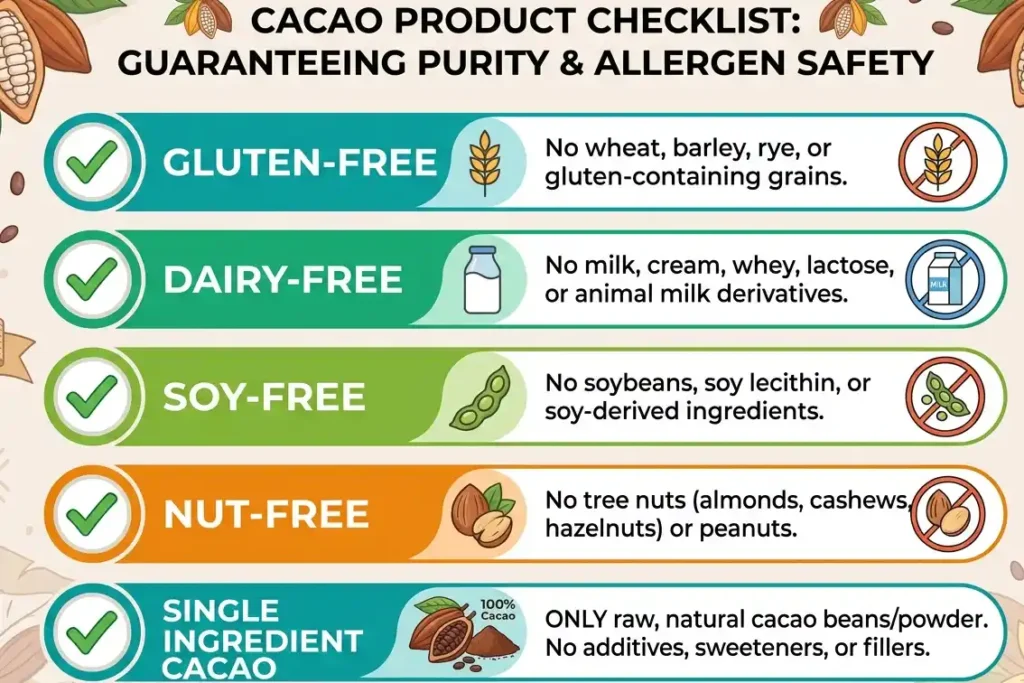
Pure cacao — the kind made from nothing but the bean of the Theobroma cacao tree — is naturally free from every major allergen:
- Gluten free. Cacao beans contain no wheat, barley, rye, or any gluten-containing grain. The bean grows on a tropical tree, not in a cereal field.
- Dairy free. There is no milk, whey, casein, or lactose anywhere in a cacao bean. Dairy only enters the picture when manufacturers add it during processing.
- Soy free. Pure cacao needs no emulsifiers. Soy lecithin is added to processed chocolate for texture — it has nothing to do with cacao itself.
- Nut free. Cacao is not a tree nut. It is a seed from a tropical fruit pod. There is zero botanical relationship between cacao and the tree nuts that cause allergic reactions.
- Egg free, fish free, shellfish free, sesame free. None of these have any connection to cacao.
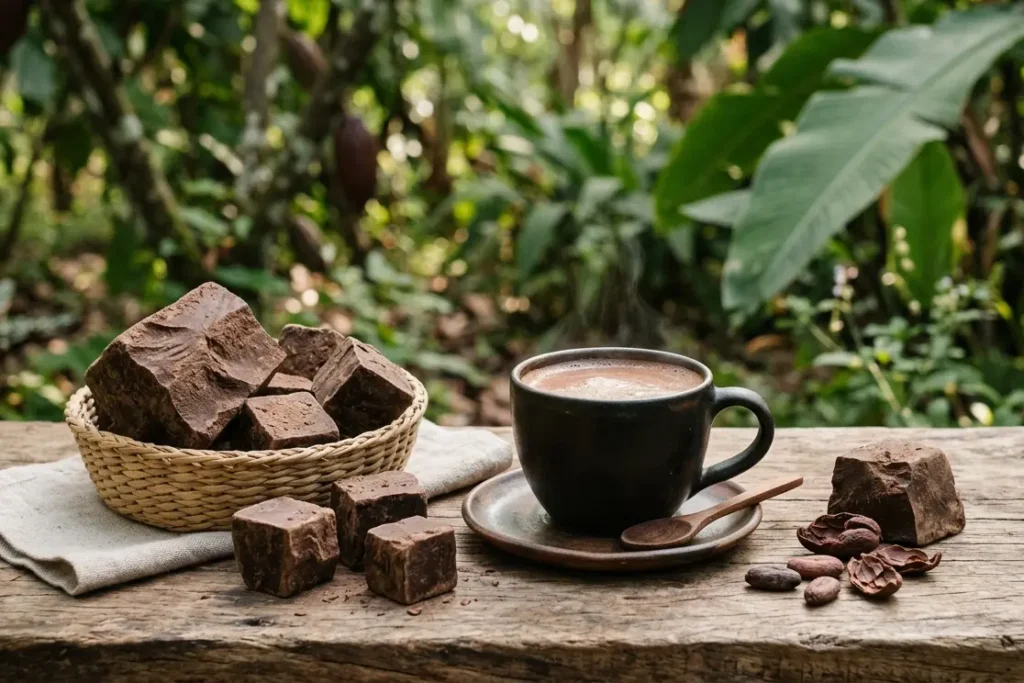
In its natural state, cacao is a single-ingredient food. One ingredient. Nothing added, nothing removed, nothing mixed in.
The risk is never in the cacao itself. The risk is in what happens to it between the tree and your cup.
And that is exactly why source and processing matter more than any other factor.
Why factory-sealed ceremonial cacao is the safest choice for allergy sufferers
If pure cacao is naturally allergen-free, then the only question left is: how do you make sure it stays that way?
The answer comes down to one word: contamination.
Most cacao — even premium, single-origin, ceremonial-grade cacao — passes through multiple processing stages after it leaves the farm. It gets shipped to a secondary facility. It gets repackaged. It gets stored alongside other products. It gets handled on equipment that also processes milk chocolate, nut products, or gluten-containing foods.
Every one of those touchpoints is a contamination window. And every one of those windows is a risk for someone with food allergies.
Mayä Magic Cubes take a fundamentally different approach.**
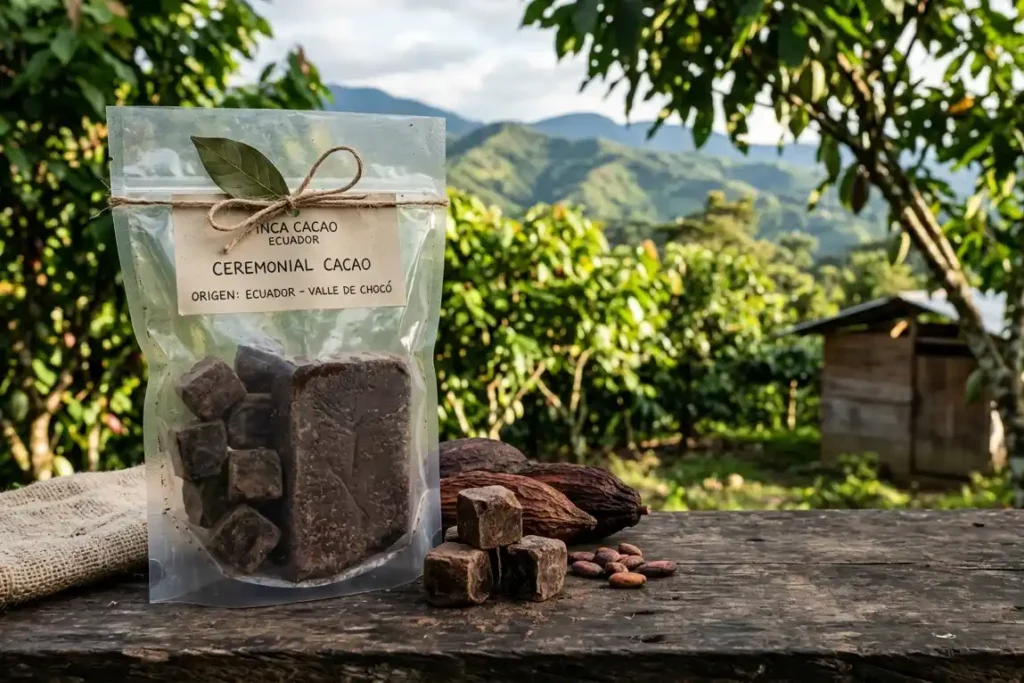
Our 500g blocks and 2kg bags of Premium Ecuadorian Raw Ceremonial Cacao are sealed at the factory in Ecuador. Not repackaged in a secondary facility. Not transferred to shared equipment. Not stored in multi-product warehouses.
Sealed. At. The. Factory.
This means:
- No secondary processing facility. The cacao goes from Ecuadorian source to sealed package in one location.
- No shared equipment. No production lines that also handle dairy, nuts, soy, wheat, or any other allergen.
- No repackaging. The product you receive is in the same sealed packaging it entered at origin.
- No contamination window. From factory to your door, the cacao never contacts another food product.
The result is ceremonial-grade cacao that is not just naturally allergen-free in theory — it is allergen-free in practice. No “may contain” disclaimers. No shared-facility warnings. Just pure, single-ingredient, factory-sealed Ecuadorian cacao.
Compare that to most premium cacao brands on the market, which routinely carry disclaimers like “manufactured in a facility that processes tree nuts” or “may contain traces of milk and soy.” Those warnings exist because those products pass through contamination windows that Mayä Magic Cubes simply do not.
→ Shop Mayä Magic Cubes — Factory-Sealed, Allergen-Free Ceremonial Cacao
How to verify your cacao is allergy-safe — a checklist
Whether you are shopping for Mayä or evaluating any cacao product, here are the five things to check:
1. Single-ingredient label. The ingredients list should say one thing: cacao. If there is anything else listed — sugar, lecithin, vanilla, “natural flavours” — it is not pure cacao and it introduces allergen risk.
2. Factory-sealed packaging. Was the product sealed at the point of origin, or was it repackaged in a different facility? Repackaging means a second set of equipment, a second facility, and a second contamination window.
3. No shared-facility disclaimers. Look for the absence of warnings like “may contain traces of…” or “manufactured in a facility that also processes…” These warnings are legally required when cross-contamination risk exists. If they are not there, the manufacturer is confident in their process.
4. No soy lecithin or emulsifiers. True ceremonial cacao does not need emulsifiers. If soy lecithin appears on the label, the product has been processed beyond its natural state — and soy is a major allergen.
5. Traceable origin and processing chain. Can the brand tell you exactly where the cacao was grown, where it was processed, and where it was packaged? Traceability equals accountability.
Mayä Magic Cubes pass all five. Factory-sealed in Ecuador. Single ingredient. No shared-facility warnings. No emulsifiers. Fully traceable from Ecuadorian farm to your door.
Want to try it? See the full range of Mayä Magic Cubes — available in 500g blocks and 2kg bags, or browse all our Sacred Collection.
The bottom line
Chocolate allergies are real. But true cacao allergy is exceptionally rare.
The vast majority of people who react to chocolate are reacting to what manufacturers add to it — dairy, soy, nut traces, gluten — or to cross-contamination from shared processing facilities.
Pure ceremonial cacao, in its natural single-ingredient form, is free from all top allergens. And when that cacao is factory-sealed at origin — never repackaged, never processed on shared equipment, never stored alongside allergenic foods — the contamination risk drops to zero.
That is exactly what Mayä Magic Cubes deliver. Premium Ecuadorian Raw Ceremonial Cacao. One ingredient. Factory-sealed. Zero compromise.
Shop Mayä Magic Cubes — 500g Blocks & 2kg Bags →
Explore our full Sacred Collection | Visit the Maya Sacred Shop