Let me be honest with you about something.
I’ve been part of the UK wellness space long enough to watch ceremonial cacao go from something whispered about in Glastonbury healing tents to a phrase plastered across Instagram reels and gifting hamper sites. And with that growth has come a lot of noise — beautiful packaging, emotive language, and products that have very little to do with what ceremonial cacao actually is.
This piece isn’t a buyer’s guide. It isn’t a recipe post. It isn’t a breakdown of benefits — those already exist in abundance. This is about something more specific: the intersection of ceremonial cacao, intentional sacred ritual, and genuine wellness gifting in the UK. What it means to give (or receive) cacao as a sacred gift. Why the ceremony matters as much as the cacao itself. And how to tell the difference between something that will genuinely shift a person’s relationship with their own wellbeing, and something that will sit unopened in a cupboard by February.
The Problem With Wellness Gifts (And Why Cacao Is Different)
British wellness gifting has a specific failure mode. We are brilliant at curating things that look intentional — crystals, bath soaks, journal sets, adaptogen sachets — but the actual transformation, the lived experience these things are meant to spark, never quite arrives. The gift is opened, appreciated, and quietly shelved.
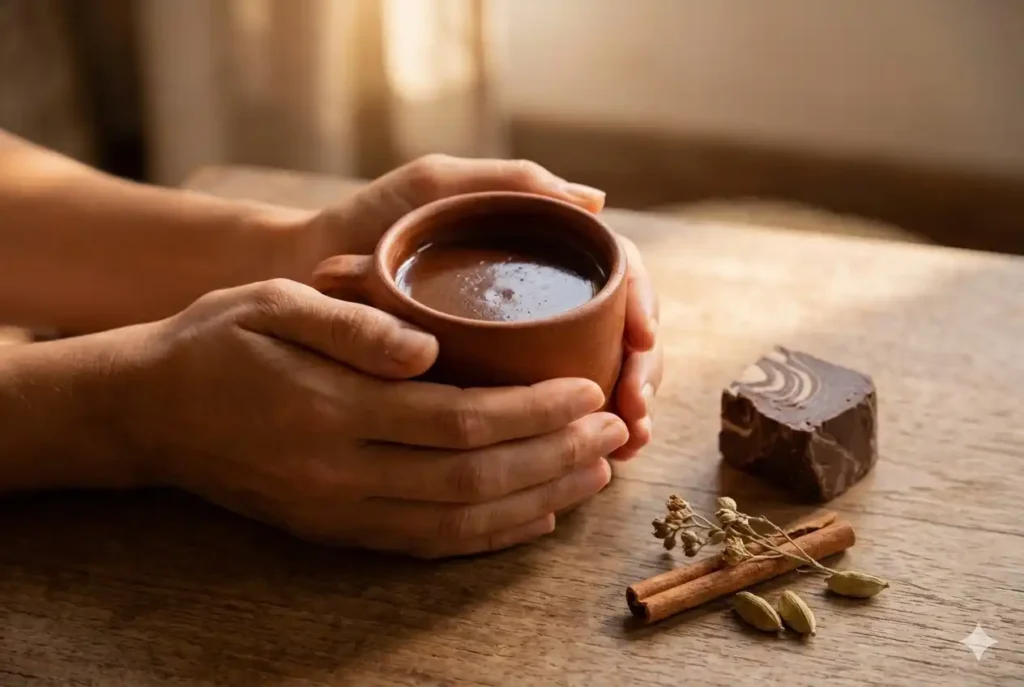
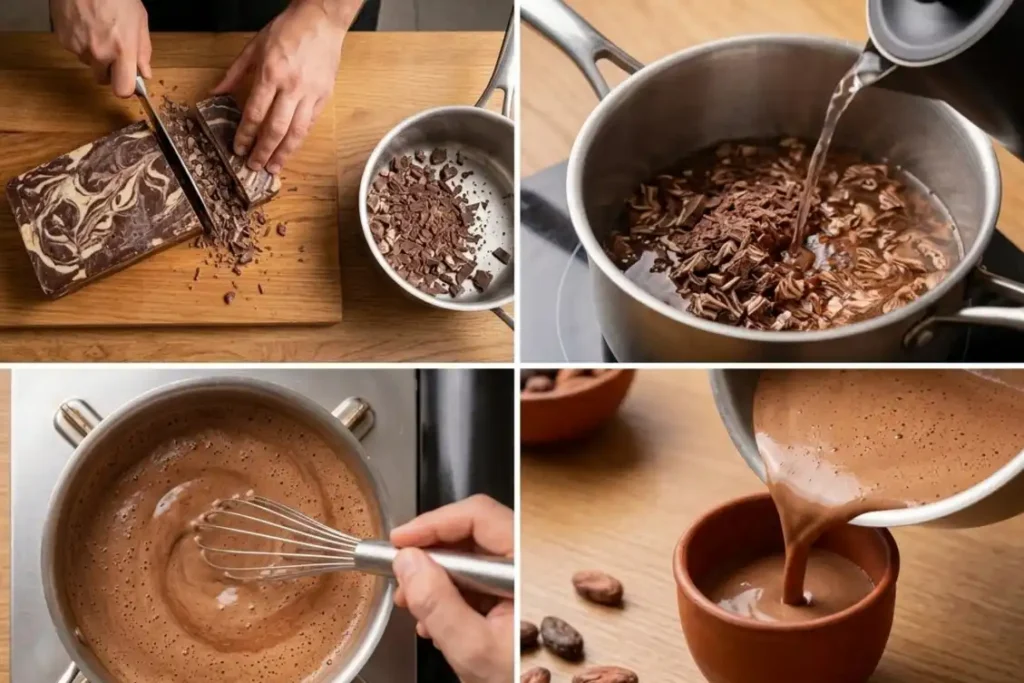
Ceremonial cacao breaks this pattern when it’s gifted correctly. Not because it’s inherently more potent than a beautifully made bath oil or a high-quality herbal tea — but because it asks something of the person receiving it. You can’t passively consume ceremonial cacao the way you can spray a room mist. You have to prepare it, warm it, hold it, and — if you’re doing it with any degree of intention — be present for a few minutes while you drink it.
That friction is the feature, not the bug. It creates a pause. And for most people living at the pace that modern UK life demands, a structured daily pause — even ten minutes — is genuinely rare and genuinely valuable.
If you’re thinking about cacao as a gift, this is the lens to bring: you’re not giving someone a product. You’re giving them a ritual framework they can actually use.

Understanding What ‘Sacred Ritual’ Actually Means in a UK Context
The word ‘sacred’ makes a lot of people in Britain instinctively reach for ironic distance. We’re not a culture that has historically been comfortable with the language of ritual and ceremony outside of organised religion — and even there, the participation rates tell a story.
But something is shifting. The data is hard to ignore. Mindfulness apps have tens of millions of UK users. Sound bath classes fill up weeks in advance. Cacao ceremonies — which exist at the intersection of spiritual intention and functional plant medicine — now take place in community halls in Leeds, yoga studios in Bath, and private homes across the Home Counties.
What this tells us is that the hunger for ritual is real and growing. But it’s being expressed in secular, accessible, somatic ways. People aren’t necessarily looking for dogma. They’re looking for practices that help them feel connected — to themselves, to their bodies, to the people around them, to something quieter than the relentless forward motion of daily life.
Ceremonial cacao, when understood properly, is one of the most elegant expressions of this impulse. Its roots are genuinely ancient — the Mayan and Mesoamerican traditions that used cacao in ceremony predate our current wellness moment by thousands of years. But its practice translates surprisingly well into a British morning. The warming cup, the moment of quiet, the act of doing something intentionally just for yourself: none of this requires initiation, none of it requires a script.
That accessibility is exactly why it works as a wellness gift. You don’t need to explain shamanic tradition to give someone a meaningful experience. You just need to give them something real, with enough context to use it.
What Makes Ceremonial Cacao a Meaningful Wellness Gift — Not Just a Pretty One
I want to draw a distinction here that I think gets glossed over in most gifting content.
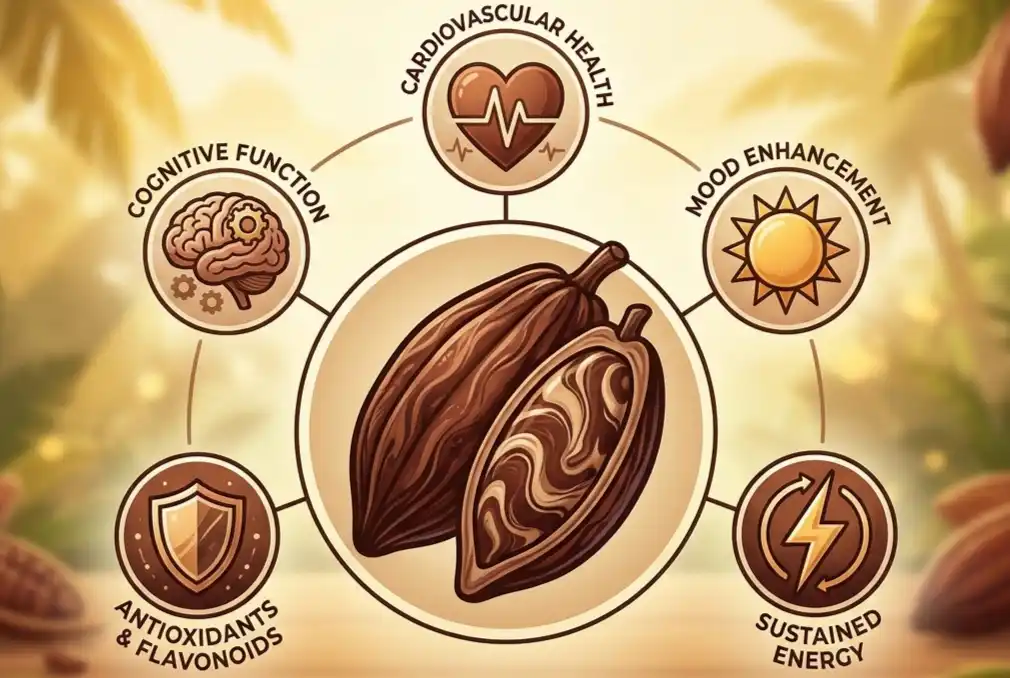
A meaningful wellness gift does something. Not just aesthetically, not just symbolically — it actually produces a shift in the recipient’s body and state of mind. Ceremonial cacao does this through a combination of compounds that are genuinely physiologically active: theobromine for sustained, non-anxious energy and vasodilation; anandamide, which occurs naturally in cacao and acts on the same receptors as cannabis but gently; phenylethylamine, associated with elevated mood and emotional openness; and a genuinely impressive mineral profile — magnesium, iron, zinc — that most people in the UK are deficient in.
A pretty wellness gift looks good and signals thoughtfulness. A meaningful one changes how someone feels within twenty minutes of using it. Ceremonial cacao, prepared properly from genuinely ceremonial-grade paste, does the latter. That distinction is what separates it from most things in the UK gifting market right now.
The other thing ceremonial cacao offers that most wellness gifts don’t is repeatability. A bath oil is used once or twice. A journal is filled and set aside. A genuinely good ceremonial cacao — one that tastes extraordinary, that makes the body feel open and warm, that creates a clear and recognisable internal shift — becomes a daily practice almost automatically. People don’t need to be convinced to repeat an experience that makes them feel good.
The Gifting Landscape: How Ceremonial Cacao Fits Into UK Wellness Culture Right Now
UK wellness gifting is currently worth several billion pounds annually, and it’s growing. But much of that market is dominated by large brands that prioritise visual appeal and shelf presence over genuine functional quality. The interesting space — the one that ceremonial cacao occupies — is the premium, purpose-led segment: smaller producers, ethically sourced ingredients, products that tell an honest story about provenance and practice.
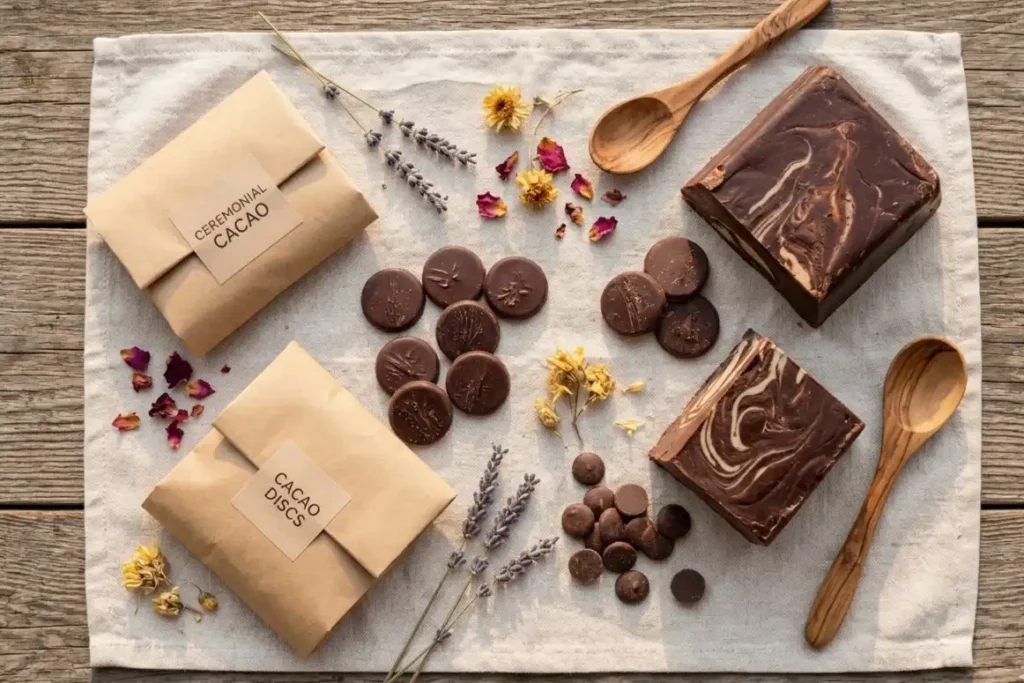
This is also the segment that’s most vulnerable to confusion and misrepresentation. Because ‘ceremonial cacao’ has no legal definition in the UK, any brand can use the term. Raw cacao powder, Dutch-processed cocoa dressed in kraft paper, and genuinely heirloom-bean ceremonial paste can all be sold under the same language.
For gift-givers, this matters enormously. When you’re choosing something to give another person — particularly something you’re framing as sacred, as healing, as intentional — you need to know it’s the real thing. Not because authenticity is a box to tick, but because the experience the recipient has will be completely different depending on what’s actually in the package.
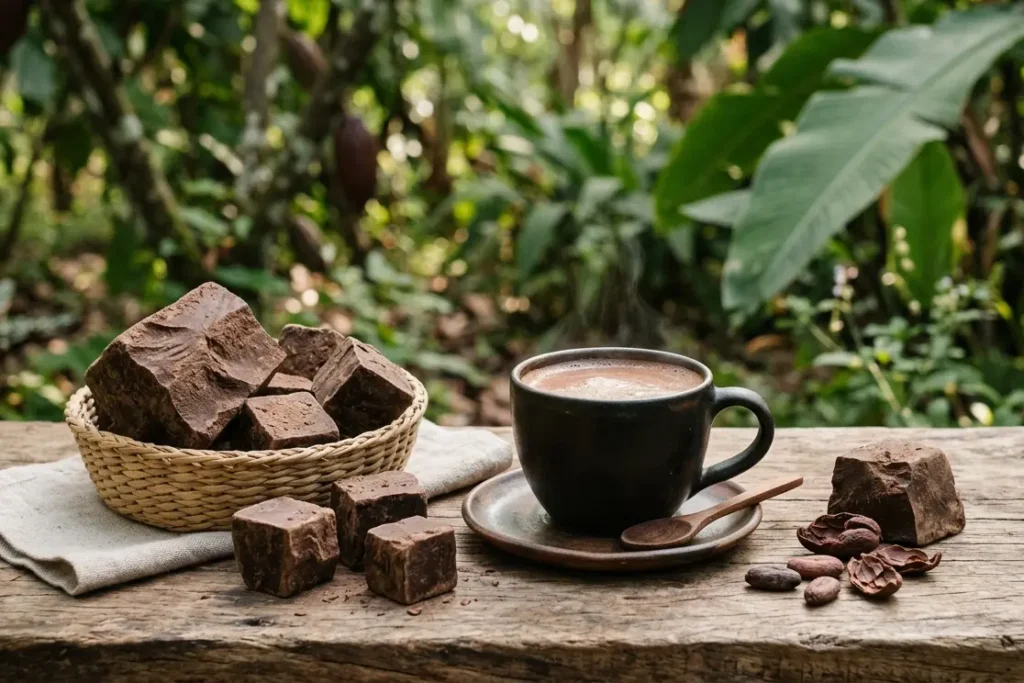
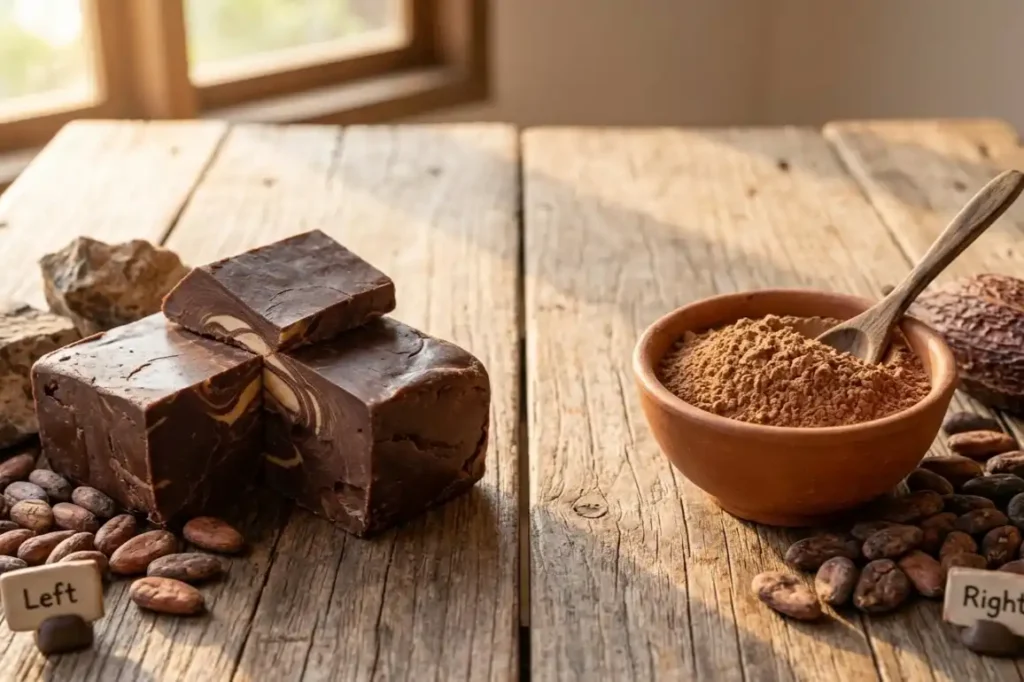
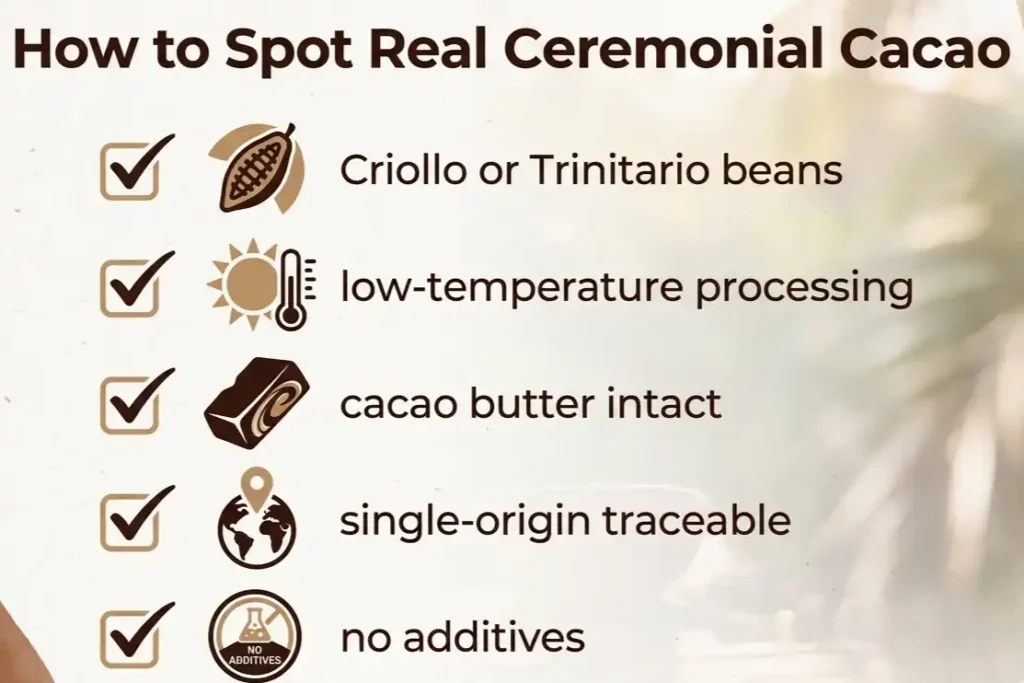
A few things worth knowing when assessing a ceremonial cacao product for gifting: look for single-origin, named-bean provenance (Criollo and Trinitario are the heirloom varieties worth seeking out); confirm that the cacao butter is fully intact (meaning it’s a paste or block, not a de-fatted powder); check that there are no additives whatsoever; and ideally, look for a supplier with a clear relationship with their farming community, not just a vague ‘ethically sourced’ claim.
How to Gift Ceremonial Cacao Intentionally
The act of giving ceremonial cacao is itself an opportunity for intention. Here’s how I’d approach it, based on years of using and facilitating cacao in wellness contexts.
Start with the vessel. Ceremonial cacao deserves a proper cup — not a paper mug, not a travel flask. If you’re building a cacao gift, consider pairing it with a handmade ceramic that has some weight and beauty to it. The cup becomes part of the ritual. It’s the object the recipient will reach for each morning, which means they’ll associate it with the practice you’re introducing them to.
Add context, not instruction. A short card or note that explains the intention behind the gift — not a step-by-step guide (those exist online), but the ‘why’ — goes a long way. Why you thought of them. What you hope the practice gives them. Even something as simple as: ‘This is what I reach for when I need to feel like myself again.’
Consider complementary elements thoughtfully. Cacao pairs naturally with warmth, stillness, and sensory softness. Natural beeswax candles, a small sachet of cinnamon or cardamom (traditional cacao additions), a piece of raw honeycomb, or a hand-bound journal are all companions that reinforce the ritual without overcomplicating it. Avoid anything that dilutes the simplicity — this is a practice about presence, not about product accumulation.
If you want to offer something even more grounded, consider inviting the recipient into a shared experience: a cacao ceremony, either hosted privately or at one of the growing number of community events across the UK. The ceremonial context — the circle, the intention-setting, the collective breath — adds a dimension that a beautiful gift set, however thoughtfully assembled, simply cannot.
A Word on Sacred Gifting as a Practice in Itself
There’s something I’ve noticed working in this space over the years. The people who give cacao thoughtfully are usually the same people who have their own practice — who understand from the inside what it feels like when a small morning ritual anchors an otherwise chaotic day. They’re giving from experience, not from a curated lifestyle ideal.
I think that’s worth naming, because it points to something real about wellness gifting at its best. The most powerful thing you can share isn’t a product — it’s a practice that’s already working for you. Cacao tends to get shared this way. Someone drinks it, something shifts, and they instinctively want the people they love to have access to the same experience.
That’s not marketing. That’s how plant medicine has always moved through communities. Word of body — not word of mouth.
If you’re exploring ceremonial cacao and sacred gifting as someone new to both, the best place to start isn’t with the most expensive or elaborate option. It’s with one genuinely good block of ceremonial-grade cacao, a quiet morning, and no agenda beyond the cup in your hands.
Everything else grows from there.

The UK Wellness Gift That Actually Does Something
The UK wellness market is maturing. Consumers are more discerning than ever, more sceptical of inflated claims, and increasingly drawn to things with genuine provenance, functional depth, and an honest story behind them.
Ceremonial cacao sits at the convergence of all of this. It has thousands of years of use behind it. It has a clear, well-researched functional profile. It connects the person using it to a living tradition of growing, fermenting, and preparing cacao that supports farming communities on the other side of the world. And it creates a daily pause — something most of us are genuinely, desperately short of.
As a wellness gift in the UK right now, it’s hard to think of something more timely or more real.
Give it well. Receive it with curiosity. And if you haven’t yet had your first proper cup of ceremonial cacao — made slowly, with the cacao butter intact, from beans grown with care by people who know exactly what they’re doing — start there. The rest will make sense after that.
Check out our Sacred Collections.