
Nobody corrected me for two years.
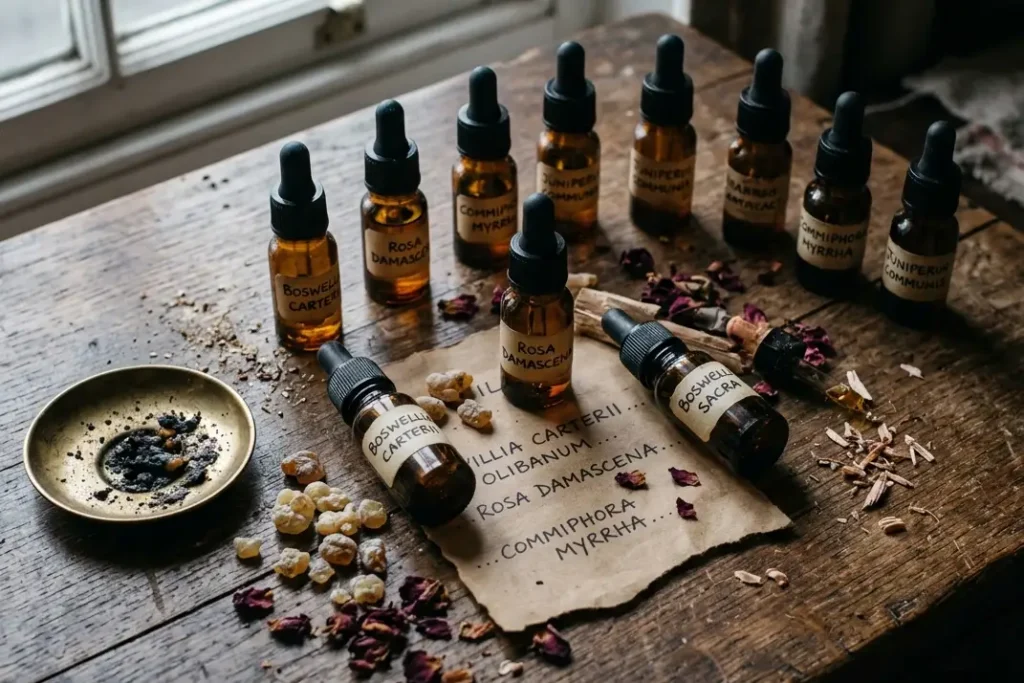
I ran a sound healing circle out of my living room in Sheffield. Every session, I burned what the label called frankincense. I told participants what I was burning. They nodded. The sessions were fine. Nobody knew enough to tell me I had the wrong thing, including me.
The correction came from a woman named Priya, an Ayurvedic practitioner who had been working with plant medicines for over a decade. She arrived early to one of my sessions, walked through the door, stopped, and said: “That is not frankincense.”
She was not unkind about it. She showed me the ingredient list on my bottle, explained what I was actually looking at, and then opened her own kit and handed me something genuinely different. One drop, warmed between her palms, held near my face.
The change was not subtle. My chest opened. My breathing slowed before I had decided to breathe differently. Later that evening, three separate participants said unprompted that the session had felt different, heavier somehow, more present. None of them knew anything had changed.
I went home and threw away every oil I owned.
What you are reading now is what came after that evening. Four years of learning this properly, sourcing from people who know what they are talking about, making new mistakes at a more informed level, and eventually building a ritual shelf I trust completely. These are the eleven oils on that shelf. This is why each one is there, and how to buy them without the two-year detour I took.
Why the UK Market Is Designed to Confuse You
Under UK CLP labelling law, any product can be marketed as a “fragrance oil” while containing as little as 2% actual botanical content. The remaining 98% is typically synthetic musks, phthalates, and cheap carriers engineered to produce a smell that resembles the plant without doing anything the plant actually does.
This is not a fringe practice. It runs through a significant portion of the UK wellness market, including brands with clean branding, high review counts, and professional packaging. The reviews are mostly positive because most buyers have never encountered the genuine article and have no reference point for comparison. I was one of those buyers for two years.
The reason this matters for ritual work is not philosophical. It is grounded in peer-reviewed science.
Genuine frankincense contains incensole acetate. That compound activates the TRPV3 receptors in the brain responsible for anti-anxiety response and shifts in conscious awareness. The FASEB Journal published research documenting this mechanism in 2008. Synthetic replicas do not contain incensole acetate. They produce something that smells recognisably similar to someone who does not know what frankincense actually smells like. They do not produce the neurological effect. When your practice depends on your nervous system genuinely responding, using the synthetic version is not a slightly inferior version of the same thing. It is a different thing entirely.
If you want to understand the broader science behind how natural fragrances produce measurable wellbeing effects beyond frankincense specifically, we have covered that in detail separately.
Mintel found 62% of UK home-fragrance buyers now actively look for free-from claims. Searches for natural fragrance oils in the UK have grown roughly 40% year-on-year since 2023. Consumer awareness is improving. Supplier honesty has not kept pace with it.
How I Decide What Earns a Place on My Altar
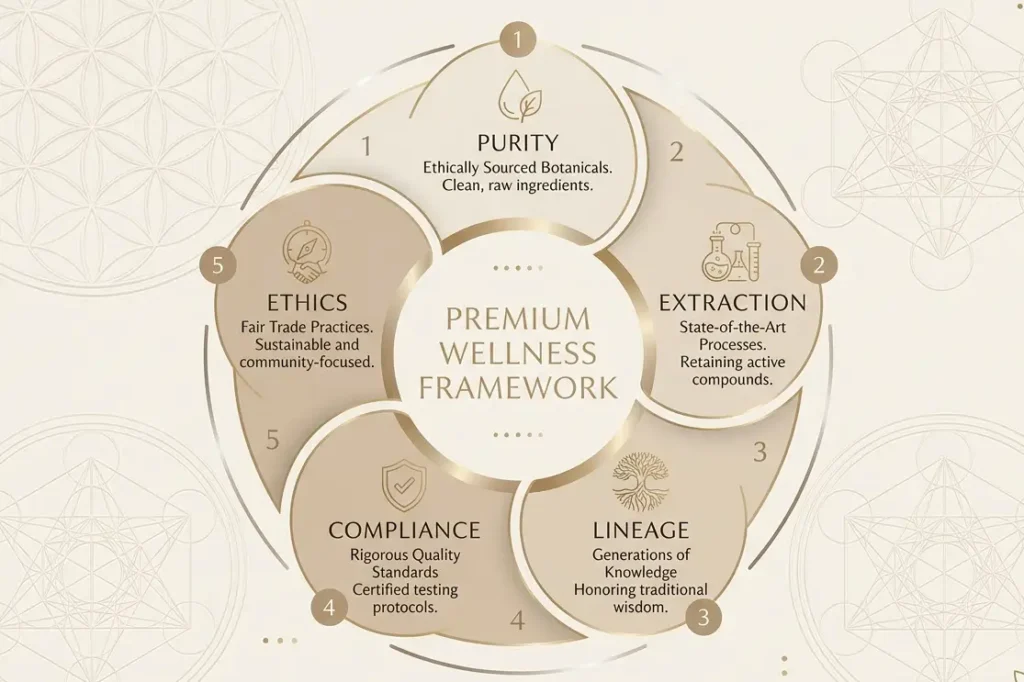
After being caught out enough times, I stopped relying on instinct alone and built a framework I apply before trusting any oil enough to bring it into ceremony.
The Latin binomial name must be on the label. Not “frankincense.” Boswellia sacra. Not “sandalwood.” Santalum spicatum. A supplier who cannot name the exact species either does not know what they distilled from, or knows and would rather you did not look too closely.
The extraction method must be stated. Steam distillation, CO2 extraction, or cold-press are real answers. “Fragrance compound” or “aromatic blend” with nothing further is a way of saying nothing while appearing informative.
I require ceremonial lineage. Oils used continuously across documented spiritual traditions for centuries carry something accumulated that matters to me in practice. This is not romantic thinking. It reflects a depth of human relationship with the plant that tells me something about how it actually works.
UK CLP compliance is not optional for anything used on skin. Allergen declarations, safety data, properly structured labelling.
Ethical sourcing must be verifiable. Not claimed. Several plants on this list are under genuine pressure from commercial overharvesting. Where an oil originates and how it was obtained is not separate from what you are working with when you use it.
The 11 Best Natural Fragrance Oils in the UK for Spiritual Rituals
1. Frankincense (Boswellia sacra / carterii)
Five thousand years of unbroken use across Egyptian temple ceremony, Catholic liturgy, Tibetan Buddhist practice, and Sufi tradition does not persist through cultural sentiment alone. Frankincense slows the breath, deepens meditation states, and produces documented anti-anxiety and consciousness-altering effects through TRPV3 receptor activation. It is the oil that showed me, in Priya’s hallway with one drop between her palms, that I had not understood what I was working with.
The species distinction is not a fine detail you can overlook when it suits your budget. Boswellia sacra from Oman and Boswellia carterii from Somalia are the correct plants. Boswellia frereana, which saturates UK listings at lower price points, looks identical on a vague label and smells close enough to fool buyers without a reference point. It lacks incensole acetate. It will not do what you are asking it to do, regardless of how clearly you hold your intention.
If you want to start with the oil that changed my entire understanding of this practice, Maya Sacred’s Frankincense Natural Fragrance is sourced to the standard this work requires.
Best for: opening rituals, deep meditation, clearing heavy energy, anointing.
2. Myrrh (Commiphora myrrha)
I avoided myrrh for over two years because it struck me as medicinal and cold, and I could not connect with it emotionally. I kept reaching past it for something warmer. Then I used it at the close of a grief ceremony I was facilitating in 2022, added it instinctively to the closing when something in the room still felt open and unfinished, and the effect was immediate and clear. Something sealed. Three people started crying who had held it together for the entire two hours prior.
Frankincense opens. Myrrh closes. That distinction only becomes real when you feel it working in a room that needs closing.
Myrrh carries one of the highest sesquiterpene contents of any essential oil. Those molecules cross the blood-brain barrier and are linked in research to releasing stored emotional patterns held physically in the body. It is not a coincidence that this plant shows up in funerary rites, deep grief work, and ceremony closure across nearly every major sacred tradition in recorded history.
Best for: grief work, closing ceremony, ancestor honouring, shadow integration.
3. Sandalwood (Santalum spicatum)
Genuine Mysore sandalwood is functionally gone from the wild. Ethical UK practitioners now work with Australian sandalwood, Santalum spicatum, which carries the same santalol compound responsible for the limbic effect that Vedic tradition built centuries of meditation practice around.
The closest description I have found for what real sandalwood does: it does not relax you the way lavender relaxes you. It turns down the volume on a radio that has been running in the background so long you stopped hearing it as noise. You notice the silence before you notice the transition into it. That specific quality has never appeared in any synthetic sandalwood I have tested, and I have tested more than I would like to admit.
Maya Sacred’s Sandalwood Natural Fragrance uses Santalum spicatum sourced for ceremonial use, which is the correct species for what this section describes.
Best for: meditation, third-eye work, devotional practice, sacred sexuality rituals.
4. Palo Santo (Bursera graveolens)
Holy wood. Used by Andean shamans for energy clearing across centuries. The oil is citrusy, slightly woody, and carries a warmth that feels approachable rather than demanding. What makes it the most practical cleansing oil for UK practitioners specifically is that it works in a diffuser or a spray bottle with no smoke. In a Sheffield terrace, a Bristol flat, or any British rental where lighting anything immediately creates problems with neighbours, smoke alarms, or landlords, that is not a minor consideration.
Source only from suppliers who explicitly confirm they use ethically-fallen wood. Freshly-cut Palo Santo drives population decline. The IUCN watchlist placement reflects current species data, not precautionary bureaucracy. This is a plant where who you buy from directly affects whether using it makes ethical sense at all.
Best for: clearing stagnant energy, daily morning practice, blessing new spaces or objects.
5. White Sage (Salvia apiana)
As a distilled oil rather than a burned bundle, white sage uses a fraction of the plant material per ritual. For UK practitioners who have become aware of the genuine and ongoing concerns around commercial mass-harvesting of Indigenous Californian sage, this shift is both ecologically sounder and a form of practical respect for the plant’s origins. The energetic effect in ritual use is directly comparable to burning. The footprint is considerably smaller. I made this switch three years ago and have not gone back.
Best for: energetic cleansing, banishing rituals, post-argument home reset.
6. Rose Otto (Rosa damascena)
Roughly 60,000 hand-picked Bulgarian or Turkish damask rose petals go into 30ml of genuine Rose Otto. That is a real production figure, not marketing language, and it explains both why this oil costs what it costs and why any version priced alongside a citrus oil should be treated as a different and lesser product, because it is.
I have used Rose Otto in ceremony with people who had not been able to cry in years. I would not have believed that sentence before I witnessed it repeatedly. Something about genuine Rose Otto moves past the ordinary internal architecture that people carry without knowing they are carrying it. I use it personally in any ritual working with grief, self-worth, or reconnection, and it has not once failed to earn its place.
Best for: heart-opening ceremony, self-worth work, divine feminine practice.
7. Cedarwood (Cedrus atlantica)
Atlas cedarwood from Moroccan cedar has shown up in protection and purification ritual across Mediterranean and North African traditions for thousands of years without interruption. In my group work it consistently produces a grounding and boundary-strengthening effect I have not been able to replicate with any substitute. It is slower and heavier than everything else on this list. It earns its weight most clearly in British autumn and winter, when the light drops and everything feels simultaneously heavy and slightly too large to manage.
Best for: protection work, boundary-setting, root-chakra grounding.
8. Vetiver (Chrysopogon zizanioides)
If you sit down to meditate and immediately find your mind has left the building to write lists, start here before spending money on anything else on this list. That is not a soft recommendation. That is the most direct advice I have for anxious practitioners in the UK.
Two drops of vetiver, diluted and applied to the soles of the feet before sitting, produces a grounding effect I have not replicated through six years of serious breathwork practice. I include that detail because it surprised me considerably, and I would rather tell you honestly than appear balanced. Called the oil of tranquillity in Ayurveda. In my experience that name describes something real.
Best for: anxiety work, deep meditation, grounding when overwhelmed, sleep rituals.
9. Lavender (Lavandula angustifolia), English-grown where possible
Common because it works. Reliably. For almost everyone. Every time. The linalool content in genuine lavender measurably calms the nervous system, and this is documented across multiple replicated clinical studies rather than inherited through folk assumption. It requires no supplementary belief to produce its effect, which is part of why it has been used continuously in British folk magic, Roman ritual bathing, and Victorian sickroom medicine without interruption across very different cultures with very different metaphysics.
English-grown lavender from Norfolk, Yorkshire, or the Cotswolds carries a gentler chemotype than Bulgarian and a slightly sweeter character better suited to sleep and bath ritual. When you can trace it to a named UK farm, buy that one without hesitation.
Best for: sleep rituals, anxiety, ritual bathing, bedroom altar work.
10. Patchouli (Pogostemon cablin)
The version most people have encountered once and decided they dislike is the young, unaged oil. It is sharp, immediately present, and synthetic-smelling even when it is technically plant-derived. Properly aged patchouli, held for 24 months or longer, is so different it genuinely reads as a separate substance. Warm, deep, complex, and grown entirely into itself.
I sat with this oil for close to a year before I understood what it was doing. It is used in Tantric tradition for sacred sexuality ritual and in Western occult practice for prosperity and abundance work. Now it is one of the oils I reach for most consistently and recommend most honestly to practitioners who come to me having already decided they hate patchouli.
Best for: abundance work, sacred sexuality, sacral chakra rituals.
11. Holy Basil / Tulsi (Ocimum sanctum)
The most sacred plant in Hindu tradition and the most underused oil on this list among UK practitioners who did not grow up within South Asian lineages. I include it specifically because I think that gap represents a missed opportunity rather than a considered choice.
Tulsi clears mental fog with a speed that still catches me off guard after years of working with it. It is traditionally used to prepare a space for divine presence before devotional practice. In practical use it behaves like something genuinely responsive, adjusting to what the nervous system needs in that specific moment rather than pushing toward one fixed state. I use it before any ritual requiring me to be simultaneously grounded, clear-headed, and open. Nothing else on this list manages all three at once.
Best for: clarity rituals, devotional practice, mental reset, morning meditation.
Matching Oils to Ritual Purpose
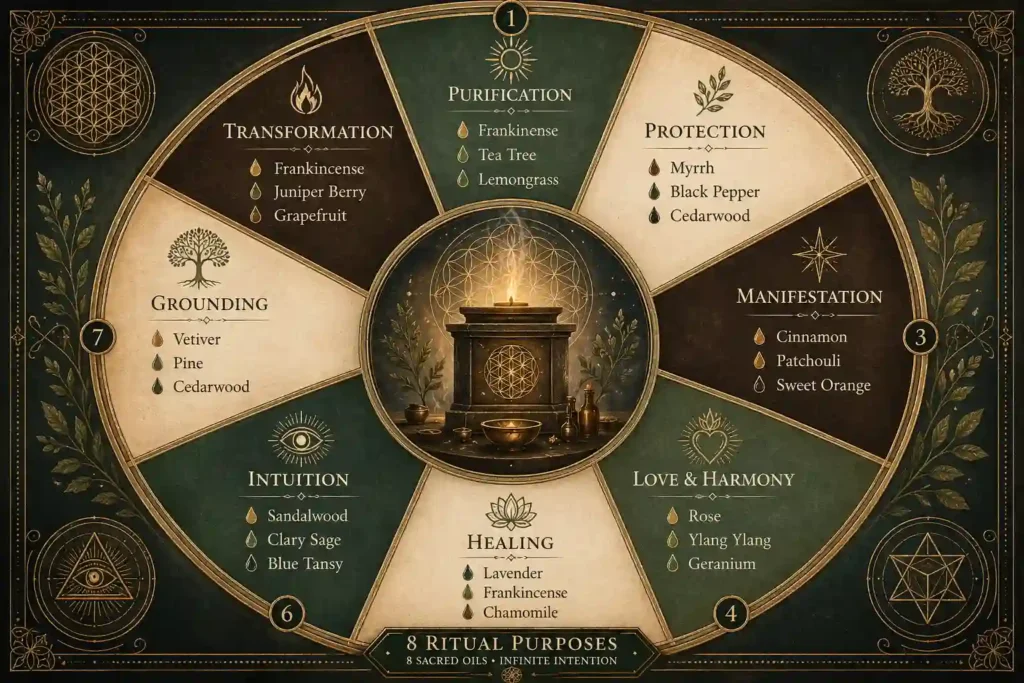
Cleansing and banishing: White Sage, Palo Santo, Frankincense
Protection: Cedarwood, Frankincense, Patchouli
Heart-opening and grief: Rose Otto, Myrrh, Sandalwood
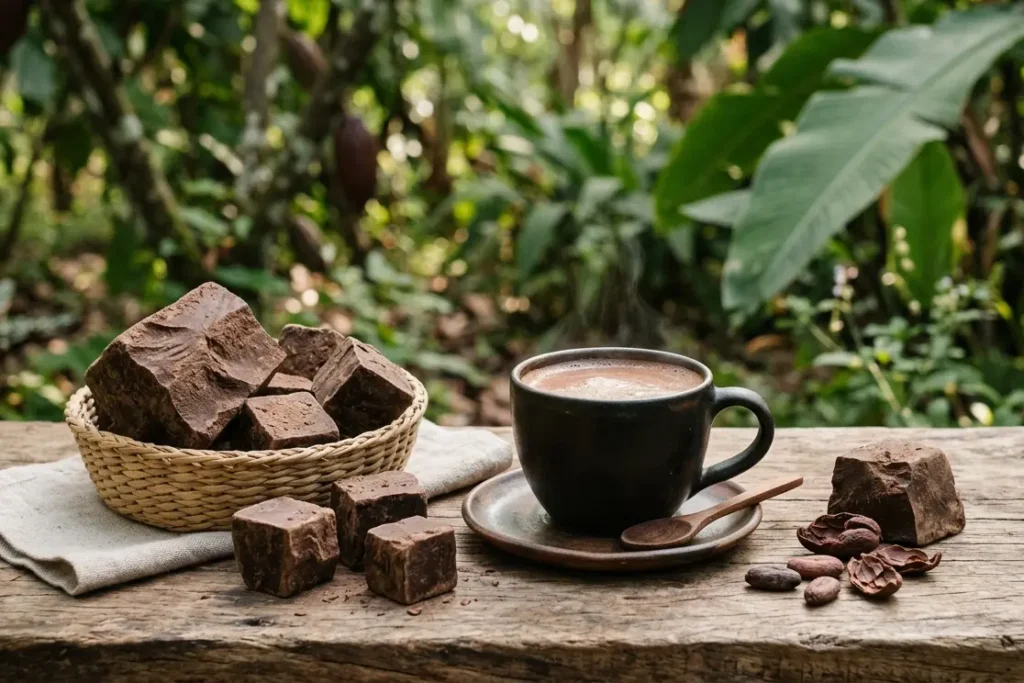
If you are looking to experience a professionally facilitated heart-opening ritual that incorporates these oils alongside ceremonial cacao, Maya Sacred’s Cacao Ceremony brings all of these elements together in one guided experience.
Manifestation and abundance: Patchouli, Holy Basil, Frankincense
Grounding and anxiety: Vetiver, Cedarwood, Lavender
Meditation depth: Sandalwood, Frankincense, Holy Basil
Sleep and dream work: Lavender, Vetiver, Myrrh
Closing ceremony: Myrrh, Cedarwood, Sandalwood
Five Methods That Actually Work
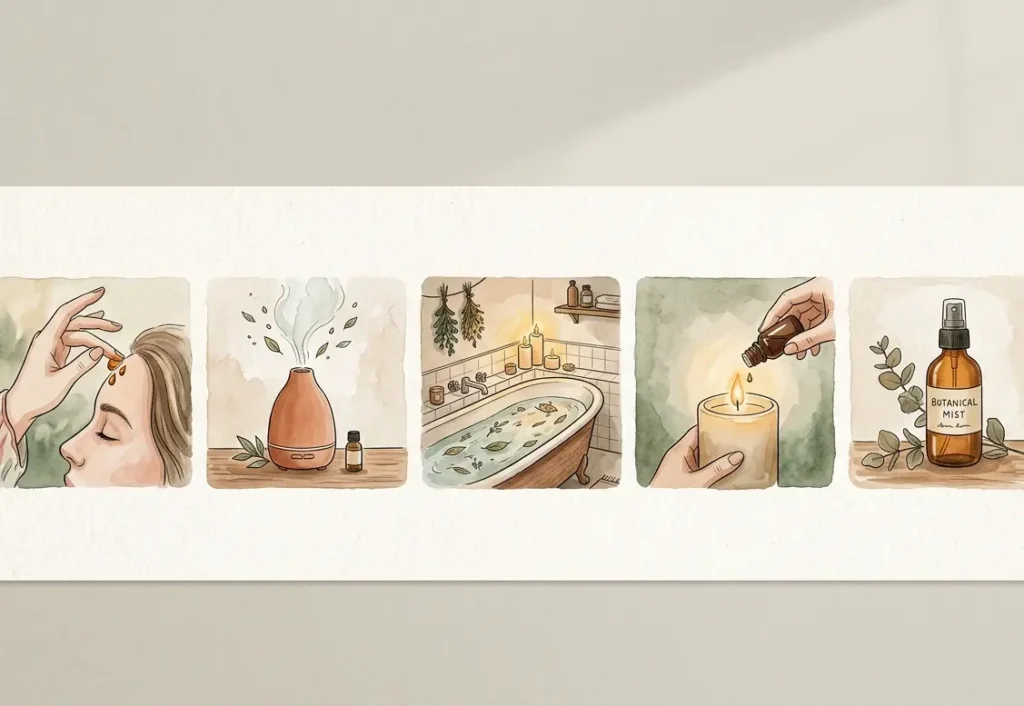
Anointing. Dilute 2 to 3 drops into 10ml of carrier oil, jojoba, fractionated coconut, or grapeseed. Anoint the third eye, heart, wrists, and crown before ritual begins. Say the intention out loud as you apply it. Not as atmosphere. As the actual act. The speaking is what makes this anointing rather than skincare.
Diffusion. Cold-mist ultrasonic diffuser only. Heat denatures the molecular structure of essential oils before they reach the air you are breathing. Run the diffuser for 20 minutes before ritual begins, not during it. The room needs time to hold the frequency before you start working inside it.
If you want to experience how professional facilitators layer fragrance oils with sound for deeper ritual effect, Maya Sacred’s Sound Bath and Sacred Ritual experiences combine both practices in a held, guided environment.
Ritual bathing. Never pour neat oil directly into bathwater. It floats and burns skin on contact. Mix 5 to 8 drops into a tablespoon of full-fat milk, raw honey, or carrier oil first, then add to the bath. Hold the intention actively for the full soak. Drifting pleasantly into relaxation is a bath. Holding intention throughout is ritual bathing. They are not the same.
Candle dressing. 1 to 2 drops applied to the candle before lighting. Bottom to top draws energy toward you. Top to bottom releases or banishes. Old practice, widely replicated across traditions, and one of the most accessible starting points for practitioners who are new to working with oils in ceremony.
Smudge spray alternative. 30 drops of oil, 30ml of witch hazel, 70ml of distilled water, glass spray bottle. Mist corners, doorways, windowsills, and objects. This is the most realistic cleansing method available to most people living in British flats, shared houses, and rentals where burning anything creates immediate friction.
What to Look For and What to Leave on the Shelf
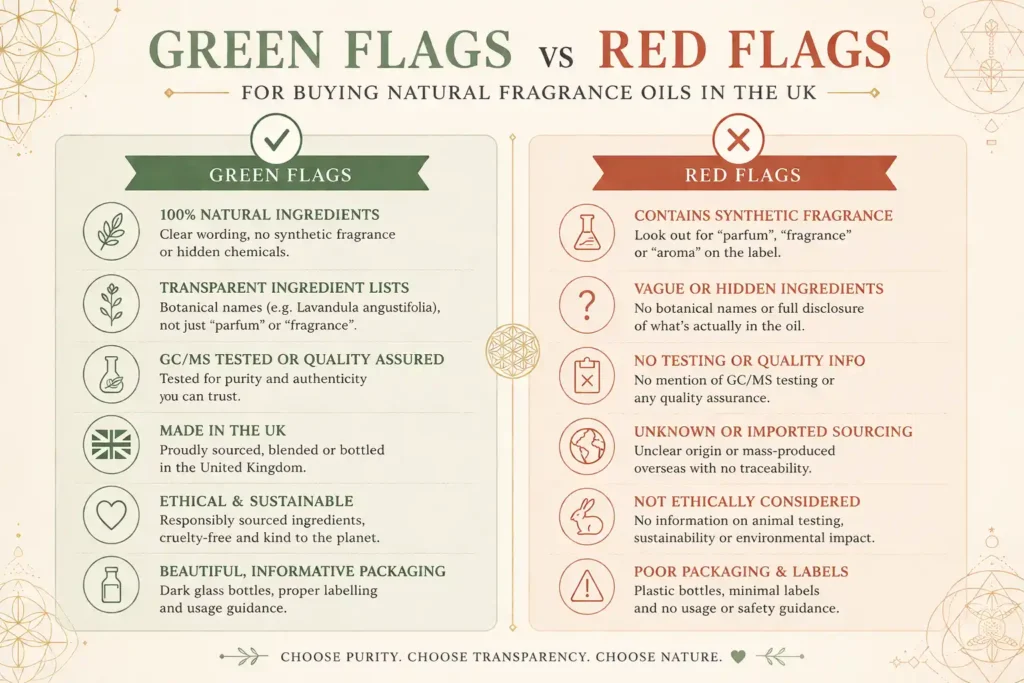
Buy from suppliers who put the Latin botanical name on every label, state the country of origin clearly, disclose the extraction method, include a batch number and best-before date, provide a UK CLP allergen declaration, and can produce an IFRA conformance certificate without making you feel like you asked for something unreasonable. Amber or cobalt glass packaging only.
Walk away from vague “fragrance oil” or “parfum” labelling with no botanical detail. Walk away from identical pricing across oils with vastly different sourcing realities. Rose Otto and Sweet Orange cannot honestly share a price bracket. The cost of the raw material alone makes it impossible, and a supplier who prices them the same is telling you something about the Rose Otto whether they intend to or not. Walk away from “100% natural” claims with no species name, clear plastic packaging, and unusually large volumes at unusually low prices.
Do not buy ritual-grade oils from Amazon. I learned this the expensive way. Counterfeiting there is systematic, well-organised, and effectively undetectable without laboratory testing.
A 7-Day Protocol for Starting Tomorrow
Three oils. One week. Frankincense, Lavender, and Cedarwood. This is the structure I give people building a practice from nothing. Most notice a real and nameable shift by day four. I always ask them to track what they actually feel rather than what they hoped to feel, because those are frequently different things and the gap between them is where the useful information lives.
Day 1, Sunday. Diffuse Frankincense for 20 minutes. State the week’s intention out loud before the session ends. Not in your head. Out loud.
Day 2, Monday. Diluted Cedarwood on the soles of the feet before leaving the house.
Day 3, Tuesday. Lavender in a ritual bath. Hold a specific, spoken intention throughout rather than treating it as relaxation time.
Day 4, Wednesday. Frankincense diffused before journaling. Write without editing yourself mid-sentence.
Day 5, Thursday. Cedarwood smudge spray on every doorway and window frame in the rooms you use.
Day 6, Friday. One drop of Lavender on the pillow. Write the intention down on paper before sleeping. Not on your phone. Paper.
Day 7, Saturday. All three oils in candle dressing for a closing ritual. Sit honestly with what shifted and what did not. Both categories carry information.
If the seven-day structure above resonates and you want to go deeper into building a consistent daily ritual practice that extends beyond oils, this guide on creating a daily sacred practice covers the wider framework.
Mistakes I Watch Practitioners Make
Buying blends without reading the carrier. Many UK retailers pre-dilute oils into mineral oil, which is energetically inert and irritates skin with repeated use. The ingredient list is on the bottle. It takes ten seconds to read it.
Storing oils near windows or the stove. UV and heat degrade molecular structure within weeks. Cool, dark cupboard.
Using too much. More oil does not produce more effect. It desensitises your olfactory receptors faster than you would expect and progressively flattens the practice until you cannot feel anything and assume the oils have stopped working. They have not stopped working. You have stopped being able to receive them. One to two drops. Stay there.
Adding oils without a clear reason. Each oil in a ritual blend should have a specific purpose you can state before you add it. Intuitive layering is a perfumery skill. In ceremony it needs to be conscious.
Not cleansing new bottles before first use. Pass them through Frankincense or Palo Santo smoke before opening. That oil has been in a warehouse, on a van, on a shelf, in the hands of people you do not know. Start clean.
What This Actually Comes Down To
The best natural fragrance oils for spiritual rituals in the UK are the ones your body responds to before your mind has finished forming a thought about them. A slowing in the breath. Something settling behind the sternum. The particular quality of a room changing before you have done anything else to it. That recognition, physical and pre-verbal and unmistakable once you have felt it, is the only test that matters. It does not come from synthetic oils no matter how honestly they are marketed or how beautifully they are bottled.
Buy the oil with the Latin name on the label. Buy it from someone who discloses the extraction method and the country of origin without hesitation or evasion. Keep a small shelf of oils you actually reach for. A collection of twenty bottles that never get opened is not a practice. It is a way of feeling like you have started without having to begin. If you are ready to begin properly, explore the Maya Sacred Sacred Collection, sourced and tested for the kind of work this guide describes.